How a student’s curiosity for engineering became an international career in Formula One, supercar design, and entrepreneurship.
At St. Stephen’s School, education is about more than preparing students for university. It is about helping young people discover their interests, develop the confidence to pursue them, and find their own path in an increasingly interconnected world.
Every student arrives with a different story. What happens during their years at St. Stephen’s, the friendships they form, the opportunities they embrace, the challenges they overcome, and the passions they discover—can shape who they become long after graduation.
For Martijn J. Hoogeveen ’19, that journey began with a move to Rome at the age of 15 and an opportunity to explore his passion for automotive engineering.
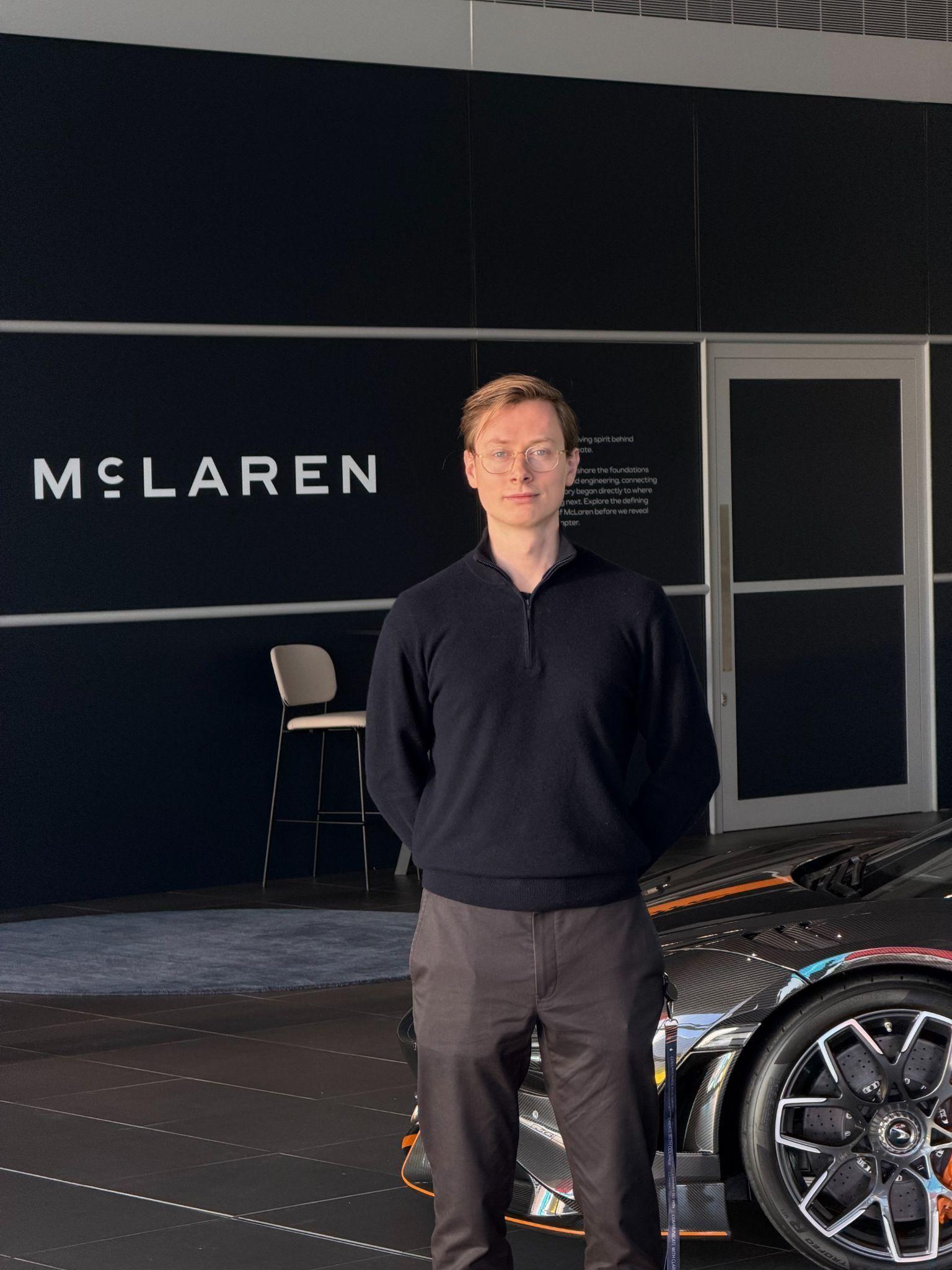
Today, Martijn is a Design Engineer at McLaren Automotive, where he contributes to the development of some of the world's most advanced supercars. His career has already taken him into Formula One, advanced automotive design, artificial intelligence, and entrepreneurship. He is also the founder of Vanté Automotive, a growing international business that supplies premium automotive components to customers across six continents.
Yet when Martijn looks back on the experiences that helped set him on this path, his memories return to St. Stephen’s: an international community that welcomed him, friendships that have lasted, and a school environment that encouraged him to turn his curiosity into something tangible.
How You Learn: Discovering a Passion and the Confidence to Pursue It
Martijn was born in the Netherlands and moved to Rome with his family when his parents’ work brought them to Italy. He joined St. Stephen’s in Grade 10, entering a new school and a new country at a formative moment in his life.
For many teenagers, such a transition can be intimidating. For Martijn, the welcoming atmosphere and international character of St. Stephen’s made the adjustment easier than he had imagined.
“Starting in the middle of high school can feel daunting, but the community made it easy,” he recalls. “I was welcomed into a school full of classmates from all over the world, and those formative teenage years in Rome shaped me a lot.”
Beyond the friendships and sense of belonging, Martijn discovered an environment in which he could experiment, pursue his interests, and begin to understand what genuinely excited him.
His fascination with automotive engineering was already developing, but at St. Stephen’s he found an opportunity to put that interest into practice through Formula 1 in Schools, an international engineering competition that challenges students to design, manufacture, and race miniature Formula One cars.
Martijn became team principal of Maximus Racing, the St. Stephen’s team that became the first Italian school to participate in the competition.
With no other participating schools in Italy at the time, the team traveled to London to compete, ultimately winning the judges’ recommendation award.
What began as a school activity became a defining experience.
“That one competition showed me how much I loved designing something with a team and chasing a result together,” Martijn says.
The competition introduced him to the combination of creativity, technical precision, leadership, and collaboration that would later become central to his professional career.
It was also an early lesson in transforming an idea into something real: working with others, solving unexpected problems, and learning that success depends not only on technical ability but also on determination and teamwork.
For Martijn, an interest that might otherwise have remained a hobby began to take shape as a possible future.
How You Live: Growing Through Relationships, Opportunity, and an International Community
Although engineering provided an early sense of direction, Martijn is equally clear about what he values most from his St. Stephen’s experience.
The friendships.
“Joining in Grade 10, I was struck by how quickly friendships formed, and those friendships are the thing I value most. I still spend a lot of time with friends I made there.”
For students who come to St. Stephen’s from different countries, cultures, and educational backgrounds, the school becomes a shared experience that extends beyond the classroom.
Martijn remembers the freedom to explore different interests and the experience of growing up in Rome alongside classmates from around the world.
“The school let me try things and follow my curiosity, and that gave me room to grow. Add Rome as the backdrop, and it was a pretty special place to be a teenager.”
Those years helped develop a broader international perspective and the confidence to feel comfortable in unfamiliar environments.
After St. Stephen’s, Martijn would move to the United Kingdom for university, join an Italian Formula One team, and eventually work in the highly collaborative world of British automotive engineering. Along the way, he would work with colleagues, suppliers, and specialists from different countries and backgrounds.
His ability to navigate those environments is something he connects directly to his teenage years in Rome.
“Rome is where I grew up, and it comes with me everywhere. It gave me an international outlook, friendships that have lasted, and unlocked my internal drive.”
For Martijn, St. Stephen’s was not simply the school he attended before university. It was a place where he became more independent, broadened his horizons, and began developing the confidence to pursue opportunities beyond what he already knew.
Who You Become: From a Student Engineering Team to Formula One
After graduating from St. Stephen’s in 2019, Martijn enrolled at the University of Warwick in the United Kingdom, where he continued developing his engineering interests.
At Warwick, he led vehicle development for the university’s Formula Student team, taking on new responsibilities and applying his technical skills in a demanding competitive environment.
The progression from Formula 1 in Schools to university-level motorsport engineering was a natural one. The scale and complexity had changed, but the underlying principles remained familiar: designing, testing, refining, collaborating, and working toward a shared objective.
His next step brought him directly into the world he had dreamed of entering.
Martijn joined Scuderia AlphaTauri’s Formula One team in Faenza, Italy, as a composite design engineer, gaining experience within one of motorsport’s most technically demanding environments.
For a young engineer whose interest in motorsport had been nurtured through a high school competition, working inside a Formula One team represented an important personal and professional milestone.
“Being inside an F1 team made it clear that this was what I wanted to do, and I haven’t looked back.”
The experience confirmed his ambitions and prepared him for the next stage of his career.
Engineering the Future at McLaren Automotive
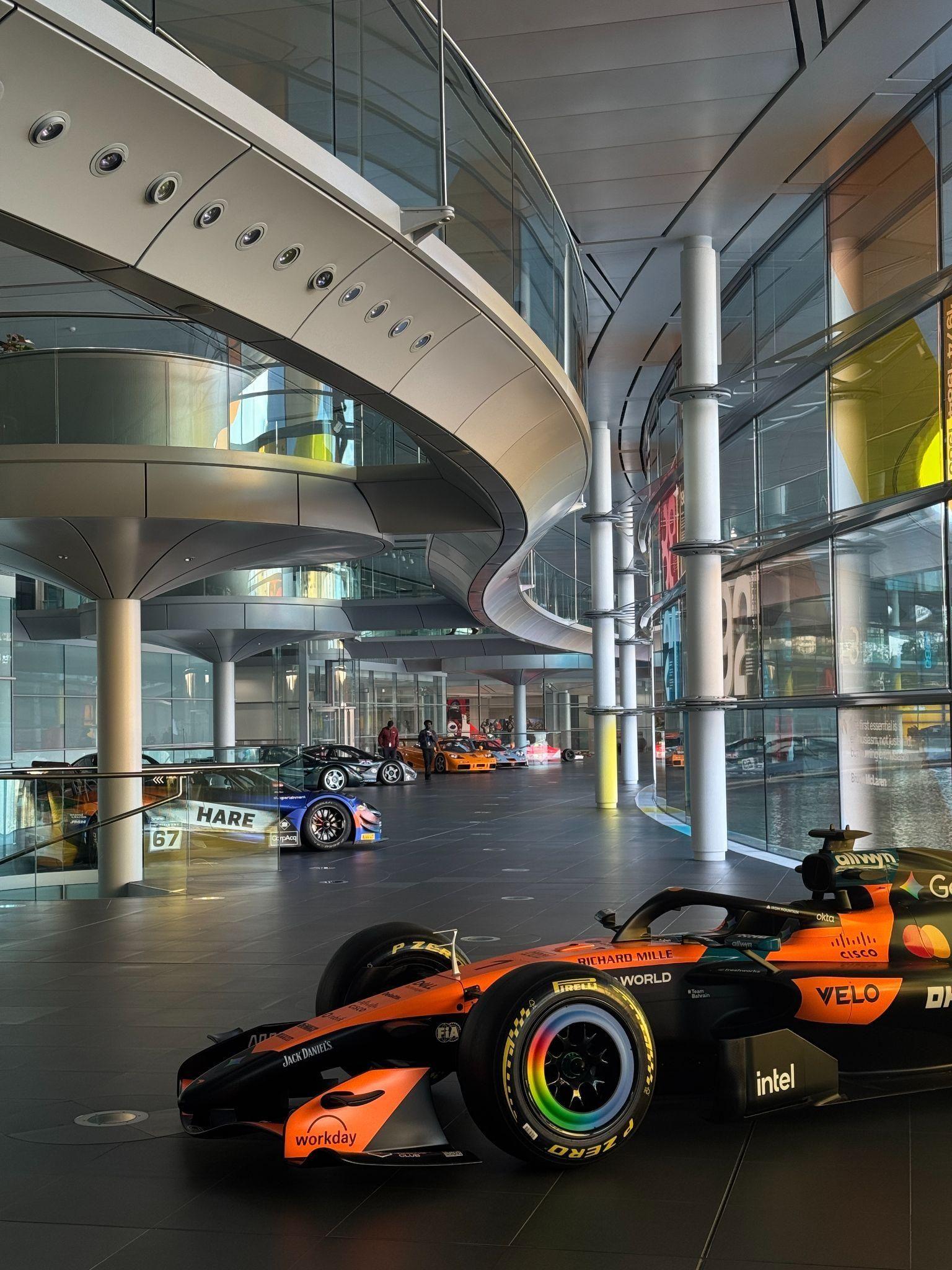
Today, Martijn works as a Design Engineer at McLaren Automotive, where he specializes in advanced Body-in-White structural systems.
These systems form the underlying structural framework of a vehicle and are fundamental to its performance, weight, safety, and overall engineering integrity.
In the world of high-performance supercars, even seemingly minor design decisions can have significant consequences. Engineers must constantly balance competing priorities, including strength, weight, crash performance, manufacturing feasibility, cost, and vehicle dynamics.
“It always comes down to pursuing every gram, at the right cost and to the right quality,” Martijn explains.
His work involves advanced composite and metallic structures, requiring close collaboration with manufacturing teams, suppliers, and engineers across different specialties.
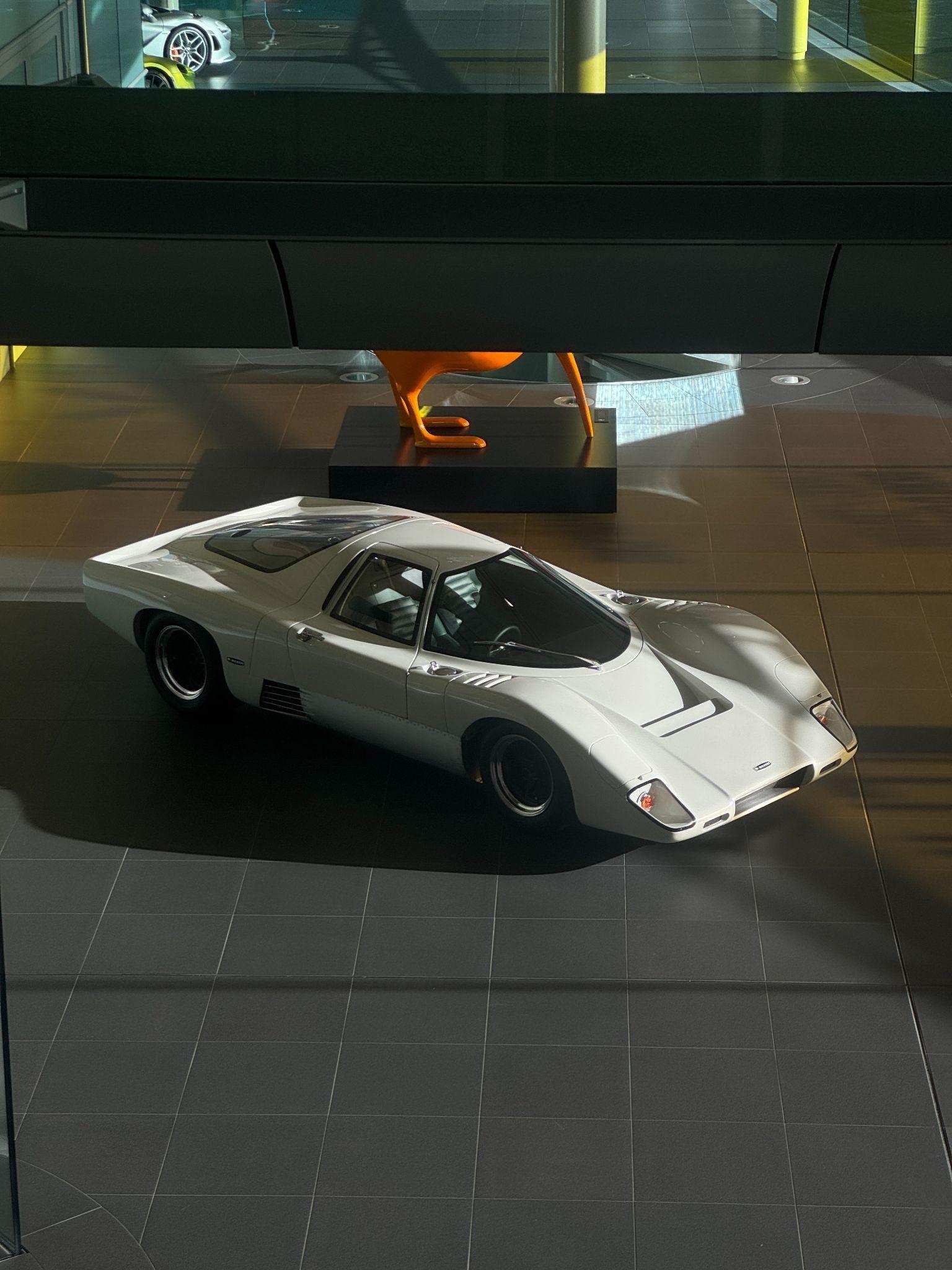
He has contributed to systems for McLaren vehicles including the Artura and the W1, helping bring highly sophisticated engineering concepts from development into production.
Among his proudest professional memories are the late nights spent at a proving ground in Spain, working with colleagues on prototype versions of the McLaren W1.
He remembers the shared determination of a team working toward a common goal, refining the car and overcoming challenges together.
“Those moments, and seeing the car come together, are what I’m proudest of, and they’re when I felt this was what I’m meant to do.”
There is a striking continuity between that experience and his first engineering competition at St. Stephen’s.
The vehicles, technology, and professional responsibilities have changed enormously. But the satisfaction of working with a team, solving difficult problems, and seeing a design come to life has remained remarkably consistent.
Beyond Automotive Engineering: Exploring the Possibilities of AI
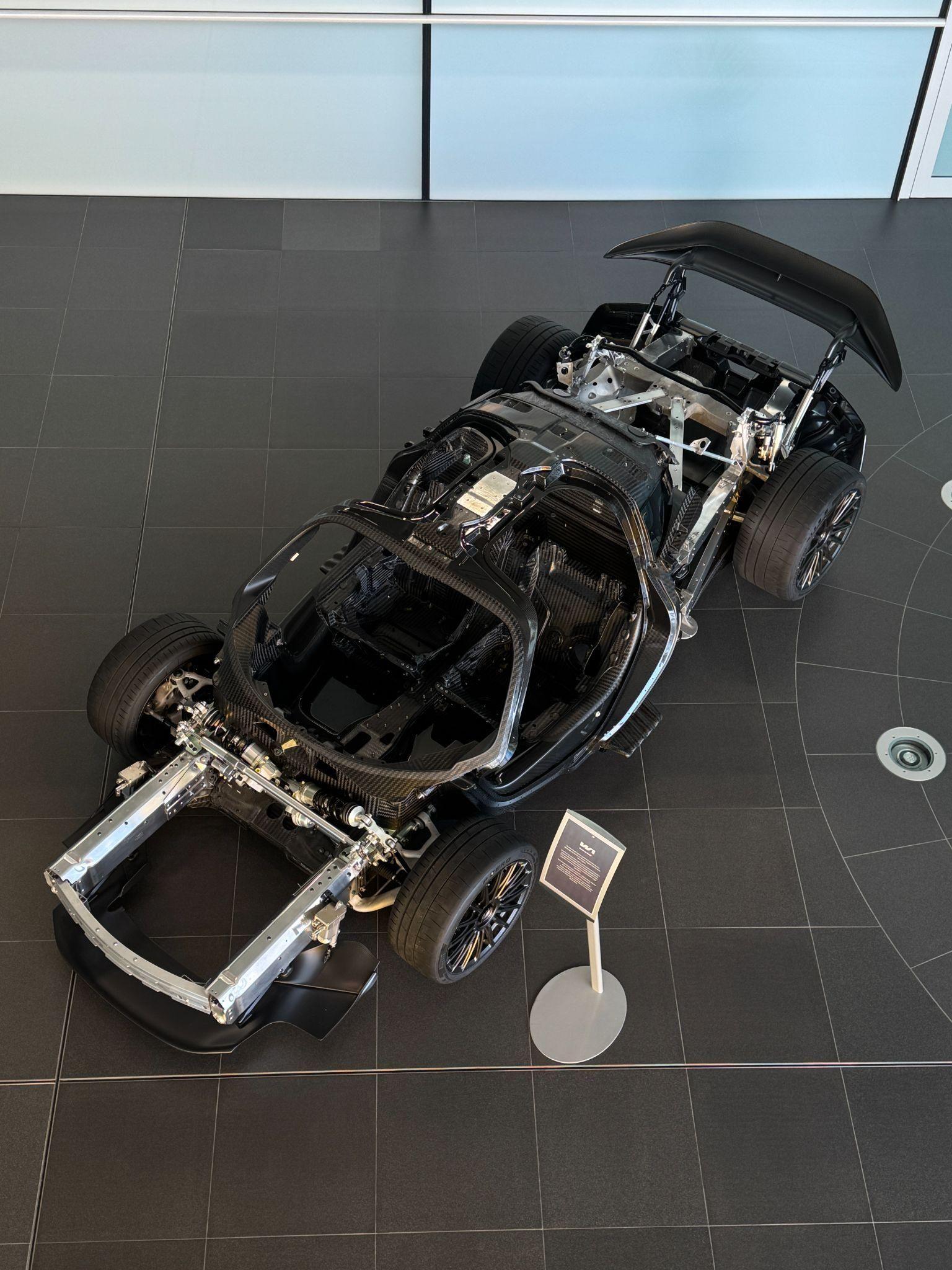
Martijn’s career is not limited to the design of high-performance vehicles.
At McLaren, he has also become involved in the growing role of artificial intelligence in engineering and business processes, developing AI-powered tools and leading continuous improvement initiatives.
He sees artificial intelligence as a technology with considerable potential to transform the way engineering organizations operate, particularly by simplifying repetitive tasks and allowing highly skilled professionals to devote more attention to complex decisions and creative problem-solving.
But he also recognizes the importance of using these technologies thoughtfully.
As AI makes it easier for employees across an organization to create their own tools, businesses face a new challenge: ensuring that innovation happens within coherent, secure, and scalable systems.
“The real work is channelling it: bringing the best ideas together, consolidating them into proper toolsets and processes, and building them on the right architecture, infrastructure, and cybersecurity,” he explains.
Martijn believes the greatest value of AI will come from its ability to support human expertise rather than replace it.
His involvement in AI reflects the same willingness to explore unfamiliar territory that characterized his earlier interests in engineering.
As new technologies reshape entire industries, the ability to remain curious, adapt, and continue learning becomes increasingly important.
An Entrepreneurial Spirit That Began at St. Stephen’s
Alongside his engineering career, Martijn has followed another ambition that traces its origins to his high school years.
While still a student, he began developing an idea for a portfolio that would showcase the automotive components he could design and create.
Years later, that idea became Vanté Automotive.
Founded as a business in 2024, Vanté has since grown into an international brand supplying premium aftermarket automotive components to customers across six continents.
For Martijn, building the company has meant combining the technical skills of an engineer with the creativity, initiative, and practical judgment required of an entrepreneur.
One product he is particularly proud of is a modular rear wing developed for Audi Group vehicles. Manufactured from aerospace-grade carbon fibre, it features interchangeable elements that allow customers to customize their vehicles.
The engineering challenges were substantial. The design needed to withstand significant aerodynamic forces while minimizing weight and preserving structural integrity, all within the constraints of a relatively small initial production run.
Seeing the finished product fitted to customers’ vehicles around the world has been one of the most satisfying aspects of the business.
“The most rewarding part is seeing customer cars on the other side of the world fitted with our components, knowing something that began as a sketch on a screen has found a home thousands of miles away.”
Yet entrepreneurship has also required him to develop skills that go beyond technical expertise.
Martijn has learned that being passionate about details can be both an advantage and a limitation. In engineering, precision is essential. In business, however, spending too long perfecting every element of a product can prevent an idea from ever reaching the market.
“A great idea is only the beginning, and perfect is the enemy of shipped.”
He now approaches his work with a clearer distinction between the areas where absolute rigor is essential—particularly safety and quality—and those where experimentation, speed, and customer feedback are equally valuable.
He has also learned to ask for help sooner, accept setbacks, and recognize that progress often comes through trial, adjustment, and persistence.
The Lasting Impact of a St. Stephen’s Education
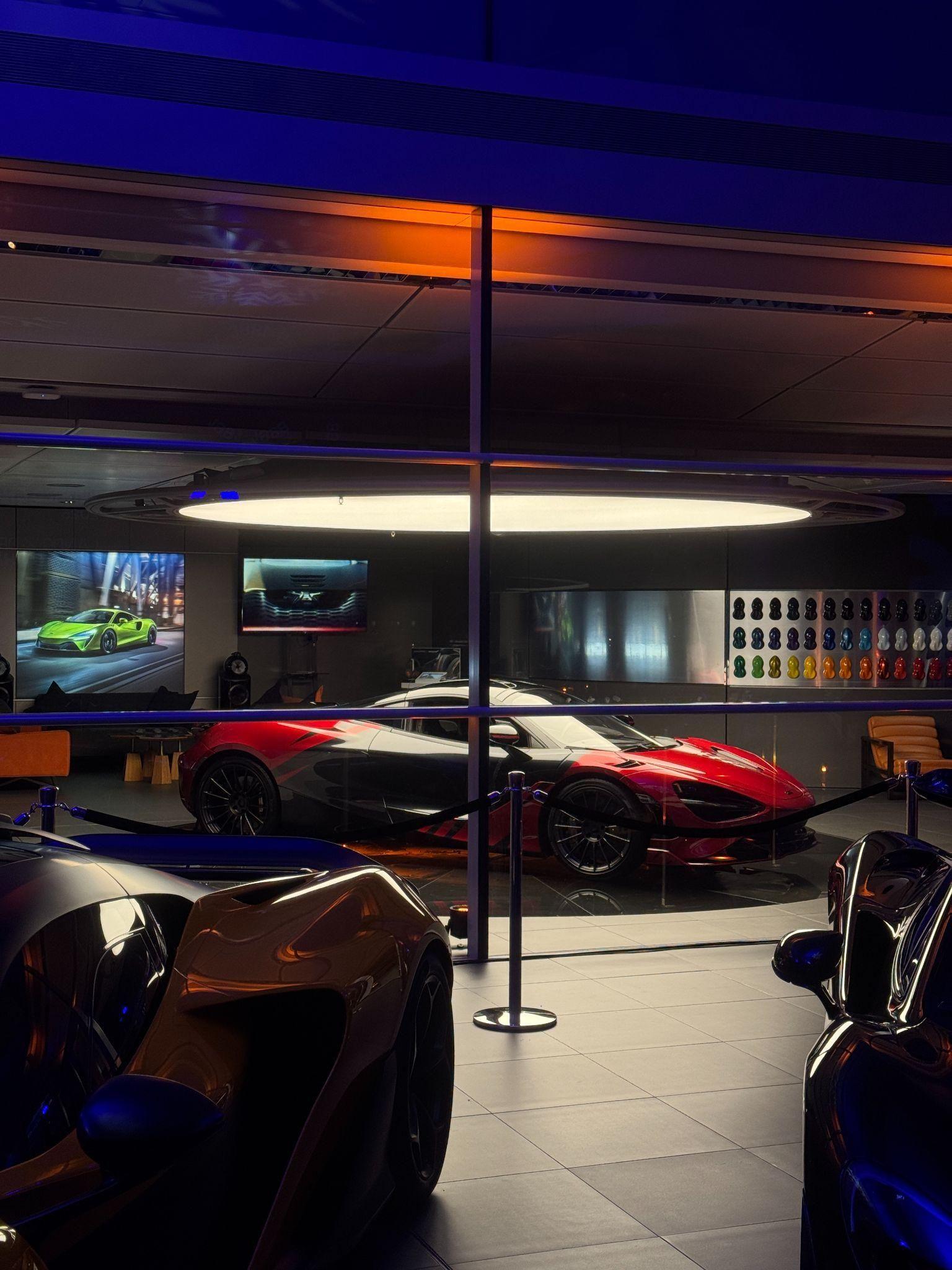
Martijn’s career has taken him from Rome to the United Kingdom, from student engineering competitions to Formula One and McLaren, and from an early portfolio idea to an international automotive business.
What makes his journey especially meaningful is not simply the professional success he has achieved, but the connections he draws between his experiences at St. Stephen’s and the person he has become.
The freedom to explore his interests gave him the opportunity to discover what motivated him. Working with classmates on a challenging engineering project helped develop his leadership and teamwork skills. Living within an international community strengthened his confidence and ability to connect with people from different backgrounds.
And the friendships he formed continue to be an important part of his life.
These experiences did not determine every step of his future, nor could anyone have predicted exactly where his career would take him. But they helped provide the foundation from which he could pursue his ambitions.
When asked what advice he would offer current St. Stephen’s students and young alumni, Martijn returns to the importance of curiosity, openness, and making the most of the opportunities available.
“Go out there with the strong foundation St. Stephen’s gives you, and be open to everything. Try different things, even if you don’t know where they’ll lead. Follow your passion, work hard, and it can take you anywhere.”
He points to his own journey as an example.
“I started with a school team and a portfolio idea, and it’s taken me to F1, McLaren, and my own business.”
Martijn remains closely connected to his St. Stephen’s friends and is enthusiastic about supporting future generations of students and alumni. He welcomes the opportunity to share his experience with anyone interested in engineering, motorsport, entrepreneurship, or artificial intelligence.
For the St. Stephen’s community, his story offers a reminder that education is not only about the knowledge acquired in the classroom or the university a student attends after graduation.
It is also about discovering interests, building relationships, developing independence, and having the confidence to explore possibilities that may not yet be fully visible.
For Martijn Hoogeveen, the journey from a student-led racing team to McLaren Automotive illustrates what can happen when curiosity is given room to grow—and when a young person is encouraged to discover not only what they can do, but who they can become.