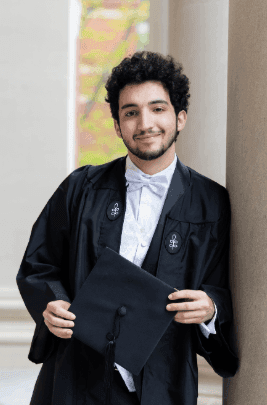
For Valerio Pepe ’22, a passion for mathematics, robotics, and the mysteries of human thought has become a journey into one of the most consequential fields of modern research.
What does it mean to think? How does the human brain learn language? And as artificial intelligence becomes increasingly sophisticated, how can we ensure that the technologies we create are understood, trustworthy, and beneficial to society?
These are among the questions that fascinate St. Stephen’s alumnus Valerio Pepe ’22, whose academic journey has taken him from Rome to Harvard University and into the rapidly evolving world of artificial intelligence research.
For Valerio, the path toward exploring some of the most complex questions in computer science and cognitive research began with a curiosity about how things work, a willingness to experiment, and teachers who encouraged him to think beyond the boundaries of individual subjects.
His story is also one of enduring relationships. Years after graduating, the teachers who challenged his thinking, the friendships he formed, and the wider St. Stephen’s community remain important parts of his life.
How You Learn: Where Curiosity Becomes Discovery
Unlike many St. Stephen’s students who arrive in Rome from other countries, Valerio is Roman through and through. Born and raised in Ostia, he spent his high school years making a daily commute of approximately an hour and a half each way to attend St. Stephen’s.
His family chose the School because of its academic reputation and the opportunities it could provide for pursuing higher education abroad.
Although those ambitions eventually brought him to Harvard, what Valerio remembers most vividly is not simply the academic preparation he received, but the relationships he developed with teachers and the freedom to explore his interests.
His high school experience was interrupted by the COVID-19 pandemic, which arrived midway through his years at St. Stephen’s. As a result, many of his strongest memories are concentrated in his freshman and senior years.
Yet even through the disruptions of that period, certain experiences remained particularly influential.
“I have a lot of very fond memories of bonding with faculty,” Valerio recalls. “I think the structure of the academic program at St. Stephen’s meant one knew most of the teaching staff quite well by the last few years.”
He remembers teachers across mathematics, literature, economics, chemistry, and physics whose lessons continued to influence his thinking long after graduation.
Dr. Pastori taught him mathematics for three of his four years and eventually served as his Extended Essay advisor. He also recalls Cecilia’s Italian literature classes, the contributions of Fabio and Rossano during the IB years, Dr. Leckie and Ms. Chemeissani in the sciences, and Mr. Byck in economics.
“I have specific events I can recall from each of these courses that I still draw upon, and I believe they’ve influenced my way of thinking more than I can give them credit for.”
For Valerio, learning was not confined to individual disciplines. The opportunity to move between mathematics, the sciences, the humanities, and practical experimentation encouraged him to approach problems from different perspectives.
Some of his most memorable experiences took place in the School’s robotics program, led by librarian and LibTech educator Elizabeth Di Cataldo.
In 2019, Valerio and his classmates won the RoboMed Robotics Competition using LEGO Mindstorms robots they had designed and built together.
He later helped assemble a team spanning several grade levels for the F1 in Schools World Finals, an experience that required students to take on everything from graphic design to computational fluid dynamics simulations.
By senior year, his interests had expanded to programming Arduino microcontrollers and building a drone.
“I think these are some of the projects that most strongly sparked my interest in tinkering with electronics, some of the most fun I’d had working in a team, and were something I looked forward to every semester.”
These projects gave Valerio opportunities to apply theoretical knowledge to practical challenges, explore unfamiliar technologies, and discover how much could be learned through experimentation.
They also introduced him to a way of thinking that would later become central to his academic work: asking questions, testing possibilities, learning from mistakes, and remaining open to unexpected results.
The Books That Helped Shape a Future
Sometimes, an experience that appears relatively small at the time can have a lasting influence.
For Valerio, two books he received during his years at St. Stephen’s helped introduce ideas that would eventually become central to his research interests.
As a junior, he received the Harvard Book Prize, accompanied by Algorithms to Live By, by Brian Christian and Tom Griffiths.
The book explores how ideas from computer science, mathematics, and cognitive science can help explain human behavior and decision-making.
It captured Valerio’s imagination.
“I actually ran into most of the basic ideas that my work is based on during my time at St. Stephen’s!”
The book introduced him to the possibility of applying mathematical reasoning to questions about human thought and behavior, opening a new intellectual direction.
A second book, Superintelligence by philosopher Nick Bostrom, was given to him by a teacher as a parting gift following his senior year.
Through it, he encountered foundational questions about the development of advanced artificial intelligence and the importance of ensuring that increasingly capable systems remain safe and aligned with human interests.
Those ideas continue to inform his work today.
What began as a teacher’s gift became part of a much larger intellectual journey.
How You Live: An International Community That Travels With You
Valerio’s relationship with St. Stephen’s did not end when he graduated in 2022.
If anything, moving abroad helped him appreciate the lasting reach of the School’s international community.
When he was accepted to Harvard University, alumnus RC Sadoff ’15 reached out to help him plan his first semester and introduced him to some of the first people he would know at college.
Other St. Stephen’s connections followed.
Maxime Lamy ’19 was studying at MIT, and the two occasionally met in Boston. Fellow alumni Natalie Silver ’22 and Lucy Silver ’24 were also part of his Boston circle, while Daniel Hugo Arnabal ’22 and Tiziano Pepe ’24 attended his college graduation.
When Valerio subsequently moved to San Francisco, he discovered that another former classmate, Ilaria Chen ’22, lived nearby.
“It seems like I am never more than a few miles from another St. Stephen’s alumnus,” he observes.
These encounters have reinforced something that began during his years in Rome: the sense of belonging to a community that extends well beyond a school campus or a particular graduating class.
For Valerio, the connections are both personal and intellectual.
“Between the ideas that got me interested in my work in the first place and the people who’ve accompanied me along the way, St. Stephen’s has remained a bigger part of my life than I might have expected when I graduated.”
His experience illustrates how the relationships formed during high school can continue to provide friendship, encouragement, and practical support as graduates navigate new universities, cities, and professional environments.
Who You Become: From Rome to Harvard
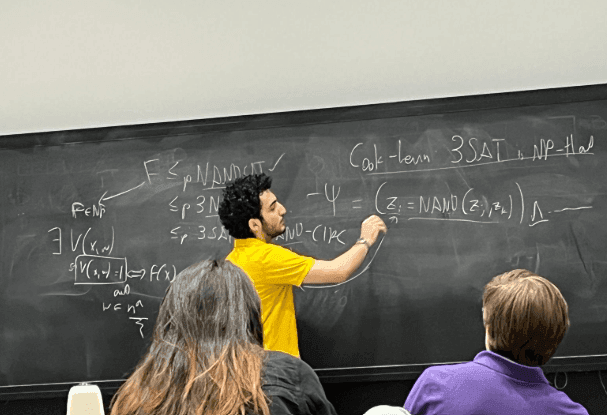
At Harvard, Valerio studied Computer Science alongside Mind, Brain, Behavior, an interdisciplinary field that brings together questions from cognitive science, neuroscience, psychology, philosophy, and related disciplines.
His academic interests developed around a fundamental question: what can the growing capabilities of computers teach us about the human mind?
Throughout history, scientists have often used the technologies of their time to develop models of how the brain works. For Valerio, the emergence of increasingly sophisticated artificial intelligence offered a particularly compelling analogy.
He became fascinated by the possibility that the human brain might operate in some ways like an extraordinarily efficient computer, and by what studying artificial neural networks could reveal about human cognition.
Language became a central focus.
Growing up bilingual had already made him curious about how people acquire and use language. The rapid development of AI language models added a new dimension to that interest.
During the COVID-19 pandemic, while still a St. Stephen’s student, Valerio spent time experimenting with GPT-3, an early large language model.
He remembers being amazed that a computer system could produce language that seemed remarkably human.
When ChatGPT was released shortly after he began university, questions that had once seemed largely theoretical suddenly became relevant to millions of people interacting with AI systems in their everyday lives.
Machines could now participate in conversations, answer questions, and produce increasingly sophisticated language.
But did that mean they could reason? And what, if anything, could their abilities reveal about human intelligence?
For Valerio, these questions opened an exciting field of exploration at the intersection of computer science, language, and cognitive research.
Understanding How Humans and Machines Think
One of Valerio’s central research interests is understanding the algorithms that make language such a natural ability for the human brain and exploring whether artificial intelligence can reproduce similar mechanisms.
He is particularly intrigued by the parallels between how humans and machines learn.
Modern language models are trained by repeatedly predicting which word or token is likely to come next in a sequence. Through this process, they develop complex representations of language and the world.
Valerio points to research suggesting that prediction may also play an important role in human cognition.
“There’s a strand of cognitive science research suggesting that the brain essentially works in the same way: constantly trying to predict what will happen next, and learning from its mistakes.”
At the same time, he recognizes profound differences between human learning and machine learning.
Large language models require enormous quantities of data to acquire their linguistic capabilities. Human children, by contrast, develop remarkably sophisticated language skills from comparatively limited exposure.
Understanding why humans learn so efficiently—and whether similar principles could improve artificial intelligence—remains one of the field’s most fascinating open questions.
For Valerio, investigating these differences offers an opportunity to advance both technology and our understanding of ourselves.
Making Artificial Intelligence Safer and More Understandable
Alongside his interest in cognition and language, Valerio is passionate about AI safety, interpretability, and alignment.
As artificial intelligence becomes increasingly capable and integrated into everyday life, he believes understanding how these systems make decisions will become one of the most important challenges facing researchers.
Unlike traditional software, in which developers explicitly write instructions for a computer to follow, modern AI systems learn complex patterns from enormous datasets.
The resulting processes can be difficult even for their creators to fully understand.
Valerio describes the development of these systems as being more like growing an intelligence than programming one.
As AI capabilities expand, so too does the importance of ensuring that their decisions and actions can be understood, evaluated, and guided responsibly.
“We’re learning how to make systems intelligent faster than we’re learning how to make them understandable.”
He is optimistic about the potential of AI to advance scientific knowledge, productivity, and human prosperity, while remaining clear-eyed about the technical and societal challenges involved.
He also cautions against viewing AI safety as a single problem with one definitive solution.
Instead, he sees it as an ongoing series of difficult but addressable challenges that will evolve alongside the technology itself.
For Valerio, that combination of uncertainty, responsibility, and opportunity makes the field particularly compelling.
When Research Meets the Real World
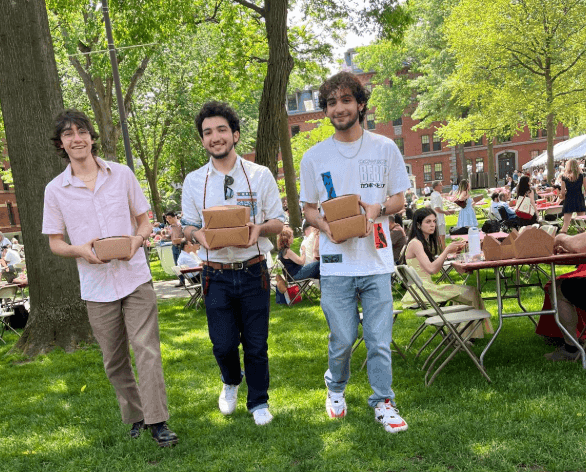
Valerio’s interests extend beyond theoretical questions about algorithms and cognition.
One project he is especially proud of involved working with journalist Nilesh Christopher on an investigation for Al Jazeera into how people were using AI chatbots to fact-check politically contentious events on Twitter/X.
The project explored an increasingly important question: when people ask an AI system to verify information, are they genuinely looking for the truth, or simply hoping the technology will confirm what they already believe?
By analyzing interactions between users and AI chatbots, the investigation examined how these technologies were influencing public conversations about news and political events.
The findings suggested that many users approached AI fact-checking with preconceived opinions and were not necessarily willing to reconsider their views when presented with contradictory information.
The project also highlighted the problem of AI-generated inaccuracies, which can further complicate attempts to establish reliable information.
For Valerio, the experience demonstrated that making information easier to access does not automatically make people more interested in understanding what is true.
As AI becomes increasingly integrated into how society consumes news, interprets events, and makes decisions, he believes questions about reliability, transparency, and human behavior will become even more important.
The investigation also gave him an opportunity to apply research methods to a real-world problem, connecting his interests in machine learning, cognitive science, and the social consequences of technology.
Learning to Ask Better Questions
For all the complexity of his research, Valerio believes some of the most valuable lessons he has learned are surprisingly simple.
The first is that research is not something reserved exclusively for scientists working in laboratories or universities.
Everyone, he argues, engages in forms of experimentation and discovery, whether through everyday problem-solving or formal academic investigation.
From a child learning through trial and error to a scientist developing a new mathematical model, the underlying process involves asking questions, testing ideas, and learning from evidence.
This perspective has reinforced the importance of intellectual humility.
Valerio believes researchers should remain open to new information, alternative perspectives, and the possibility that their original assumptions may be wrong.
His second guiding principle is a question he continually asks himself:
“What is the dumbest thing I can do right now that would bring this project forward?”
Behind the humor is a practical philosophy: avoid unnecessary complexity, identify the simplest useful next step, and keep moving forward.
It is an approach that reflects the experimental mindset he began developing through robotics projects at St. Stephen’s, where progress often came from trying something, observing the result, and refining the design.
A Message to the Next Generation
When asked what advice he would give current St. Stephen’s students interested in computer science, artificial intelligence, or research, Valerio begins not with technology but with community.
“First of all, don’t be a stranger! The St. Stephen’s community is a great one, and there are plenty of people, myself included, who want you to succeed and would be more than happy to help you.”
He also encourages young people to be ambitious in the questions they choose to pursue.
With powerful new tools becoming increasingly accessible, he believes students today have unprecedented opportunities to explore difficult problems and contribute meaningful ideas.
He emphasizes that young researchers do not need to wait until they have established careers or advanced academic credentials before beginning important work.
“The world is your oyster; you don’t have to wait until you’re an established, ‘senior’ or ‘seasoned’ researcher to work on important or interesting problems.”
His enthusiasm for discovery remains unmistakable.
There are still countless unanswered questions about human cognition, language, and the nature of intelligence, and he hopes that many will be explored and better understood during his lifetime.
He also hopes that some of the people who will help answer those questions are currently sitting in classrooms at St. Stephen’s.
The St. Stephen’s Story: A Foundation for Lifelong Curiosity
Valerio’s journey from Ostia to St. Stephen’s, Harvard, and San Francisco is a story about the power of curiosity and the opportunities that emerge when young people are encouraged to explore ideas across disciplines.
His experiences also reflect something fundamental about the St. Stephen’s approach to education: the relationships between students and teachers, the freedom to experiment, and the value of learning to think independently.
For Valerio, those influences took many forms.
A mathematics teacher who became a trusted academic advisor. Robotics projects that turned abstract concepts into practical challenges. Literature, science, and economics classes that broadened his thinking. Books that introduced questions he would later pursue at university. And friendships that continue to connect him to the School wherever he goes.
No single experience determined his future. Rather, the combination of academic challenge, personal relationships, intellectual freedom, and opportunity helped him develop the interests and confidence to pursue his own path.
Today, Valerio is exploring questions that sit at the intersection of technology, science, and human understanding—questions that may help shape how society develops and uses artificial intelligence in the decades ahead.
Yet his story is not simply about reaching Harvard or entering an exciting field of research.
It is about learning to ask questions, being willing to challenge assumptions, and discovering that intellectual curiosity can become a lifelong pursuit.
From building robots with classmates in Rome to investigating how humans and machines learn, Valerio’s journey reminds us that the most meaningful outcomes of education are not always the answers students leave school with, but the questions they become inspired to pursue.