At St. Stephen’s, learning has never been confined to four walls.
A history lesson can begin on a Roman street. A question raised in class can lead to an archaeological site, a landscape, a community, or a journey far beyond Rome. Students are asked not simply to absorb information, but to encounter places and people directly, to observe closely, to ask questions, and to make connections for themselves.
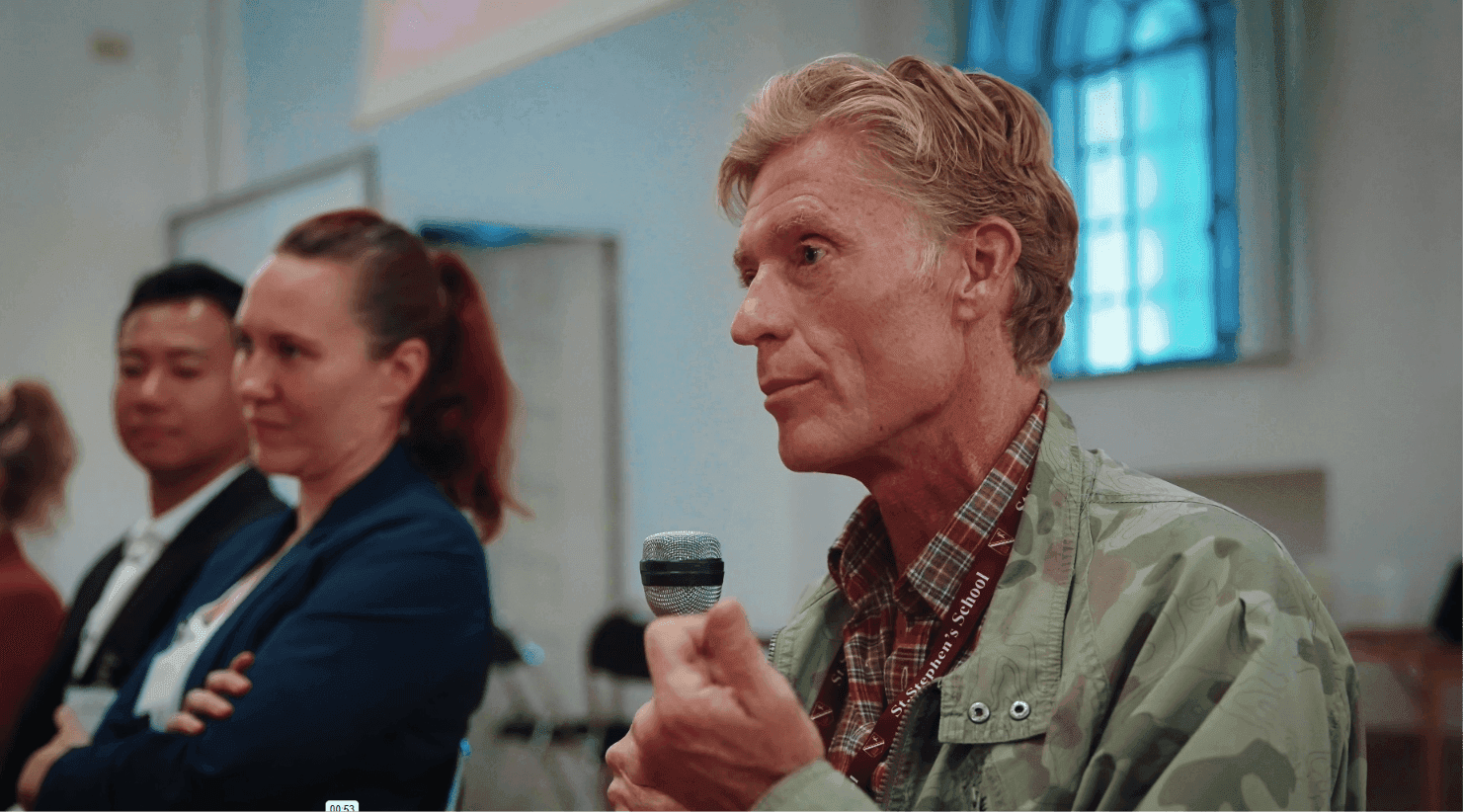
It is an approach that sits at the heart of St. Stephen’s Experiential Learning program.
In a new video, Dr. Paul Treherne, Director of Experiential Learning, reflects on why these experiences matter and why learning beyond the classroom has long been such an important part of a St. Stephen’s education.
For Dr. Treherne, this way of teaching is rooted in a simple but powerful idea: some things can only truly be understood when students experience them firsthand.
Rome as a Classroom
That philosophy has deep roots at St. Stephen’s. Years ago, while teaching history at the School, Dr. Treherne began asking what would happen if Rome itself became not an occasional supplement to a course, but one of its principal texts. Rather than learning about the city in the classroom and then visiting it afterward, students could begin with what they saw, touched, questioned, and discovered in the city — and allow those encounters to shape the academic work that followed.
That idea continues to define much of what makes learning at St. Stephen’s different.
Being the only school in the historic center of Rome gives us an extraordinary starting point. History, art, architecture, politics, literature, religion, and archaeology exist just beyond the gates of the Aventine campus. Students can move between classroom discussion and the physical evidence of centuries of human history in a way that few schools can replicate.
Broadening Perspectives Beyond Rome
But experiential learning at St. Stephen’s extends far beyond Rome.
Through fieldwork, excursions, projects, and travel in Italy and abroad, students are placed in environments that ask of them something different. They encounter unfamiliar cultures, work collaboratively, solve practical problems, adapt when circumstances change, and engage with people whose experiences may be very different from their own.
The destination, therefore, is never really the point.
What matters is what students are asked to do, notice, question, and understand once they get there.
Learning Through Experience
Experiential Learning at St. Stephen’s is deliberately designed as education, not tourism. Experiences are developed around clear educational objectives and are intended to challenge students intellectually and personally, giving them opportunities to apply what they know while also discovering what they do not yet know.
And sometimes the most valuable learning is precisely what cannot be planned.
Being somewhere unfamiliar requires independence. Working alongside others demands flexibility and empathy. Encountering a landscape, object, community, or historical site firsthand can complicate assumptions that seemed perfectly convincing in a textbook.
These moments teach students to become comfortable with uncertainty, to look more carefully, and to think for themselves.
From Idea to Experience
This October, that philosophy will once again move from idea to experience. From October 7–9, students across all four grades will take part in St. Stephen’s Experiential Learning program, stepping outside their regular classroom routines for three days of learning designed to broaden perspectives, encourage curiosity, and deepen their engagement with the world around them.
While the experiences themselves will differ by grade, they share the same purpose: to give students the opportunity to learn through participation, observation, exploration, and reflection.
That is closely connected to the broader St. Stephen’s approach to education. Academic rigor matters deeply, but education here is also about cultivating independence, creativity, care, integrity, and scholarship. The aim is not simply to prepare students to perform well academically, but to give them the confidence and judgment to navigate a complex world.
Experiential learning makes those qualities tangible.
Students may begin with history, science, art, service, or culture, but the experience inevitably asks broader questions: How do I respond to something unfamiliar? How do I work with others? What assumptions am I bringing with me? What can I learn by paying attention?
At St. Stephen’s, those questions are part of the education.
Because sometimes the lessons that stay with us longest are the ones we had to step outside the classroom to discover.