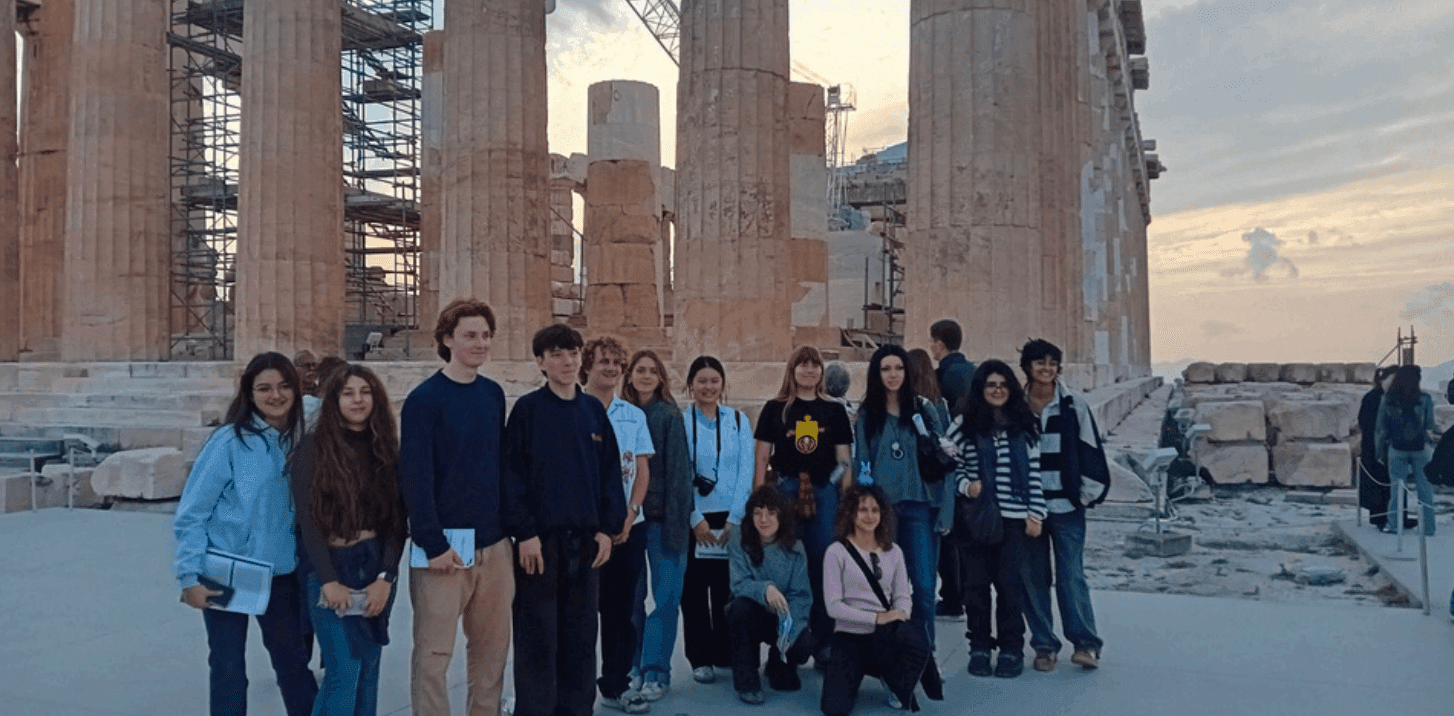
Classical Greek is probably the least-taken IB course, yet thanks to Ms. Weustink, Ms. van der Vorm, and, of course, The Lyceum, St. Stephen’s Institute for Roman Culture, Ancient Greek has become alive and relevant for us. To celebrate this, both IB and non-IB Classical Greek students spent Thursday, November 20th, through Sunday, November 23rd, visiting Athens and the island of Aegina.
Written by Grade 12 IB Student, Gaia G.
All cultural visits and sightseeing (I will mention only a few here for brevity’s sake) were paired with student presentations, allowing each of us to become an expert on a particular site or temple and teach the group what we had learned. For instance, I presented on Aristotle’s Lyceum, which was a great opportunity to deepen my understanding of the evolution of Greek philosophy.
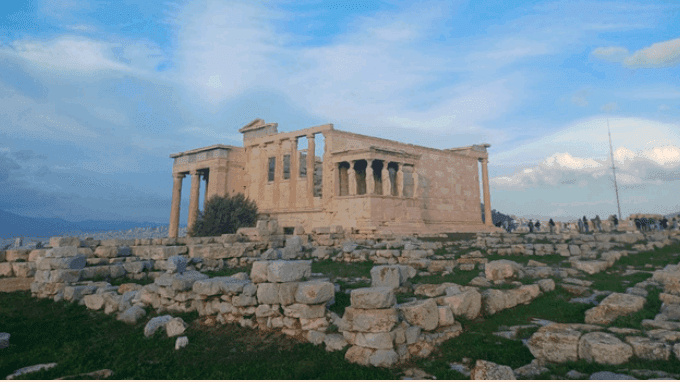
On Saturday, we visited the National Archaeological Museum, the Epigraphical Museum, and the Lyceum of Aristotle. We then explored the Acropolis archaeological site, where, for example, Arthur (Gr. 11) explained the triton columns, also known as telamones. Walking up to the Acropolis was the highlight of the trip for me. I felt truly immersed in ancient Greece, and with that view... it felt like being on top of the world. Walking down was even more breathtaking, as the sun had begun to set, the clouds glowed softly, and the ruins were gently illuminated in pink light.
We later visited the Acropolis Museum, where we learned about the rich stories told by the friezes of Athena’s temple, thanks in particular to Benjamin’s (Gr. 10) research. A lot to take in, right? Fortunately, we ended the day in Plaka, the famous and atmospheric quarter of Athens, feasting on tsatsiki and pita, Greek salads, dolmades, souvlaki, and more—accompanied by Greek folk music. It was absolutely worth it.
In Aegina, Rosa (Gr. 11) taught us about the Temple of Aphaia, while Indira and Sebastian (Gr. 12) explained the life of Pericles and the devastating impact of the Plague of Athens in 429 BC—all in front of a spectacular sea view. And, of course, a stop at “THE pistachio shop” (Ms. van der Vorm’s words) in Aegina was non-negotiable.
Many thanks again to The Lyceum, whose commitment to the classics and to the students who pursue them never ceases, and to Ms. Weustink and Ms. van der Vorm—two incredible teachers and, on this trip, fun and knowledgeable guides.